
Emagine officially launched an innovative new project at Askeaton Castle, Co. Limerick, in partnership with the Askeaton Heritage Society.
What began as a heritage and tourism initiative quickly evolved into something with a much broader purpose: improving access to Ireland's cultural heritage and enabling more people to experience places and stories that may otherwise be out of reach.

Photo via Emagine
The project highlights a growing recognition that accessibility extends beyond physical infrastructure. It is about creating opportunities for people to engage, learn and connect in ways that reflect their individual needs and abilities.
Speaking at the launch, Carmel Ryan of the Askeaton Heritage Society captured this vision perfectly:
“People have abilities, and it’s up to every organisation to see that and accommodate their strengths.”
Drawing on her own experience as a parent, Carmel's words reinforced the values underpinning the project and the importance of designing cultural experiences that are inclusive by default.
Across Ireland, many cherished heritage sites present challenges for visitors who cannot easily access them in person. Through collaboration between heritage organisations, local communities, the Office of Public Works and technology partners, projects like this demonstrate how digital innovation can help preserve these important places while making them available to wider audiences.
For Emagine and its partners, the launch at Askeaton Castle represents more than the completion of a project. It marks the beginning of a new approach to heritage engagement, one that places accessibility, inclusion and connection at its centre.
The project at Askeaton Castle is part of a broader effort by Emagine to use immersive technologies to preserve important places, expand access and create new ways for people to engage with heritage and specialised environments. The company is continuing to push the boundaries of immersive digital experiences through the development of innovative software and capture techniques that make important places more accessible, explorable and engaging.
Central to this work is the Emagine’s growing expertise in Gaussian Splatting, a cutting-edge 3D capture technology that enables highly realistic digital representations of real-world environments. By combining splats with still imagery, video, audio and 360° content, Emagine is creating interactive web experiences that allow users to explore locations in new and meaningful ways.
One recent example is a virtual walkthrough of Waterford's Viking Triangle, bringing together some of the city's most significant historic landmarks, including Reginald's Tower, Bailey's New Street, the Medieval Museum, Bishop's Palace and Christ Church Cathedral. Using immersive 3D capture and custom-built software, the project offers a natural and intuitive way to experience the area's rich heritage.
Screenshot via Emagine
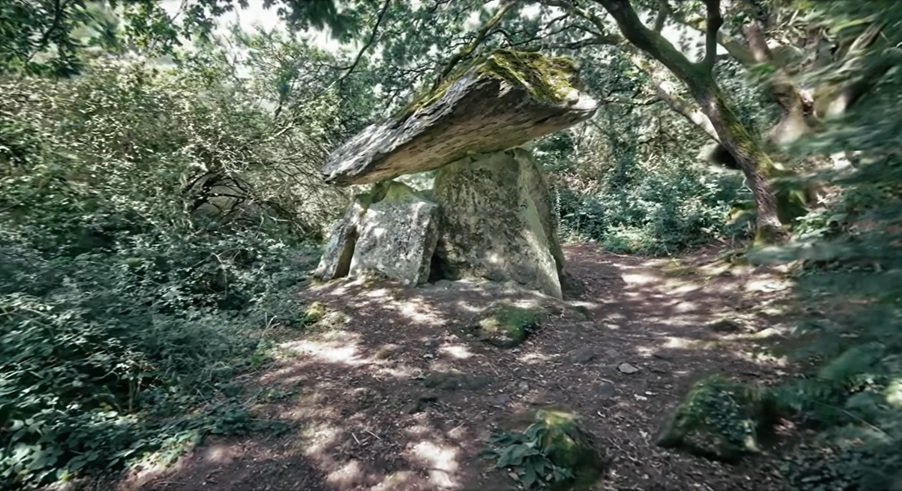
The same technology is also being used to preserve some of Ireland's oldest historical sites. At Gaulstown Dolmen, a Neolithic portal tomb in County Waterford dating back approximately 5,500 years, Emagine's advanced scanning processes are helping to create highly detailed digital records of the monument. These digital assets not only support preservation efforts but also make it easier for people to study, understand and experience sites that have shaped Ireland's story for millennia.
While heritage projects form an important part of the company's work, the applications extend well beyond the cultural sector. Recently, the Emagine team visited the WWETB Clean Room, where precision and process are critical to daily operations. The experience demonstrated how immersive digital technologies can help open up specialist environments that are often inaccessible to the wider public.
By transforming real-world locations into interactive digital experiences, organisations can showcase facilities, support education and training, create marketing content, and improve accessibility for audiences who may never have the opportunity to visit in person. The same captured content can also be repurposed into engaging short-form video content for social media, extending its reach even further.
Whether documenting ancient monuments, historic cityscapes or highly specialised technical facilities, Emagine's work is demonstrating the growing potential of immersive technologies to preserve knowledge, connect people with places, and make important environments more accessible than ever before.